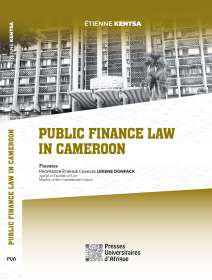
PUBLIC FINANCE LAW IN CAMEROON
This book clarifies principles, rules and procedures that govern the finances of the State, as well as those of regional and local authorities. It covers essential elements of budgetary law, public accounting law, and local public finance law. The analyses are grounded on relevant legislation. This includes: CEMAC Directives of 19 December 2011, Law No.
40,00 €
| Détails sur le livre | |
|---|---|
| Auteur | ETIENNE KENTSA |
| ISBN | 978-9956-532-49-0 |
| Nombre de pages de la version papier | 342 pages |
| Format | 16.5 / 24 cm |
| Date de publication | 2026 |
| Editeur | Presses universitaires d'Afrique |
| Langue | Anglais |
This book clarifies principles, rules and procedures that govern the finances of the State, as well as those of regional and local authorities. It covers essential elements of budgetary law, public accounting law, and local public finance law. The analyses are grounded on relevant legislation. This includes: CEMAC Directives of 19 December 2011, Law No. 2018/011 of 11 July 2018 to lay down the Code of Transparency and Good Governance in the Management of Public Finances in Cameroon, Law No. 2018/012 of 11 July 2018 relating to the Fiscal Regime of the State and other Public Entities, Law No. 2019/024 of 24 December 2019 to institute the General Code of Regional and Local Authorities, Law No. 2024/020 of 23 December 2024 relating to Local Taxation, Decree No. 2020/375 of 7 July 2020 to lay down the General Rules and Regulations of Public Accounting, and other recent texts.
The book offers a comprehensive exploration of public finance law, organized into six parts and divided into eighteen chapters. It emphasizes the evolution of public finance law, its study, and its core concepts, particularly the budget and finance law. Additionally, it delves into the content of the State budget and presents the normative framework of public finance law by examining its sources and principles applicable to public budget processes. It discusses the drafting of the finance bill, along with the process of its scrutiny and adoption. It also addresses the stakeholders involved in the implementation of the State budget and procedures followed, highlighting the principle of separation between authorizing officers and public accountants, as well as the concept of de facto management. Furthermore, the book elaborates on the three principal types of control over the State budget implementation: administrative, political, and judicial controls, underscoring the significance of accountability. Finally, it focusses on key aspects of local public finance law, including the principles that govern local budgets, their content, and the associated budgetary procedures.
This book comes at a crucial moment, following a series of significant legal and institutional reforms and serving as the first work of its kind in English. It equips readers - students, lecturers, and public finance practitioners - with essential insights into the principles of public finance law.
Foreword .................................................................................................................................................................................................................. xix
Préface .......................................................................................................................................................................................................................... xxi
preface ...................................................................................................................................................................................................................... xxiii
Acknowledgments ......................................................................................................................................................................................... xxv
Table of cases .................................................................................................................................................................................................. xxvii
Table of instruments ................................................................................................................................................................................ xxx
List of abbreviations and acronyms ................................................................................................................................. xxxiii
Part I. Introduction to public finance law ....................................................................................................................... 1
Chapter 1. Development of Public Finance Law ...................................................................................................... 5
1.1. GENESIS OF PUBLIC FINANCE ...................................................................................................................... 5
1.1.1. In England (1215-1689) .............................................................................................................................................. 6
1.1.2. In France (1314-1791) .................................................................................................................................................. 8
1.2. BIRTH AND REFORMS OF CAMEROONIAN PUBLIC FINANCE LAW .... 9
1.2.1. Shift from Resource-Based Budgeting to Result-Based Budgeting
(or Programme Budgeting) .............................................................................................................................................................. 10
1.2.2. New Budgetary Cycle .................................................................................................................................................. 12
1.2.2.1. Rule of Four Alternate Times Adjusted ......................................................................................... 13
1.2.2.2. Rule of ‘Virtuous Chain’ ............................................................................................................................... 14
Chapter 2. STUDY OF PUBLIC FINANCE LAW ....................................................................................... 17
2.1. PUBLIC FINANCE LAW AS AN ESSENTIAL DISCIPLINE
OF PUBLIC LAW ..........................................................................................................................................................................................;.......17
2.2. TEACHING OF PUBLIC FINANCE LAW IN THE FACULTIES
OF LAW AND POLITICAL SCIENCE ...............................................................................................................................20
Chapter 3. BUDGET AND FINANCE LAW ..................................................................................................... 23
3.1. DEFINITION OF BUDGET AND FINANCE LAW ........................................................... 23
3.1.1. Definition of Budget ..................................................................................................................................................... 24
3.1.2. Definition of Finance Law .................................................................................................................................... 25
3.2. CHARACTERISTICS OF FINANCE LAWS ................................................................................... 25
3.2.1. Financial Nature of Finance Laws ................................................................................................................. 26
3.2.2. Annual Nature of Finance Laws ...................................................................................................................... 26
3.2.3. Forecasting Nature of Finance Laws .......................................................................................................... 26
3.2.4. Sui Generis Legislative Nature of Finance Laws ......................................................................... 27
3.3. TYPOLOGY OF BUDGET AND FINANCE LAW ................................................................. 29
3.3.1. Types of Budgets ................................................................................................................................................................. 29
3.3.2. Types of Finance Laws .................................................................................................................................................. 30
3.3.2.1. Initial Finance Law or Finance Law of the Year ................................................................... 30
3.3.2.2. Amending Finance Laws ................................................................................................................................ 32
3.3.2.3. Settlement Law .......................................................................................................................................................... 32
3.4. FUNCTIONS OF BUDGET ................................................................................................................................ 33
3.4.1. Political Function of the Budget .................................................................................................................... 33
3.4.2. Socio-economic Function of the Budget ............................................................................................. 33
Chapter 4. CONTENT OF THE STATE BUDGET ................................................................................. 35
4.1. BUDGETARY REVENUE ........................................................................................................................................ 35
4.1.1. Tax Revenue ............................................................................................................................................................................ 35
4.1.1.1. Taxes and Levies on Income, Profit and Assets ..................................................................... 36
4.1.1.2. Taxes and Levies on Goods and Services ..................................................................................... 36
4.1.1.3. Customs Duties .......................................................................................................................................................... 37
4.1.1.4. Registration Fees and Stamp Duties ................................................................................................. 37
4.1.1.5. Other Tax Revenue ................................................................................................................................................ 38
4.1.2. Non-Tax Revenue ........................................................................................................................................................... 38
4.1.2.1. Property Income ....................................................................................................................................................... 38
4.1.2.2. Proceeds from Sale of Goods and Services ................................................................................. 39
4.1.2.3. Pension and Social Insurance Contributions ........................................................................ 39
4.1.2.4. Internal and External Borrowings ..................................................................................................... 40
4.1.2.5. Grants from International Cooperation ..................................................................................... 41
4.1.2.6. Support Funds and Bequests .................................................................................................................... 41
4.2. BUDGETARY EXPENDITURE ............................................................................................................................ 41
4.2.1. Financial Costs of Debt .............................................................................................................................................. 42
4.2.2. Personnel Expenditure ................................................................................................................................................ 42
4.2.3. Expenditure on Goods and Services ........................................................................................................... 42
4.2.4. Transfer Expenditure ..................................................................................................................................................... 43
4.2.5. Capital Expenditure ...................................................................................................................................................... 43
4.2.6. Other Expenditure ......................................................................................................................................................... 44
Part II. NORMATIVE FRAMEWORK OF PUBLIC FINANCE LAW ....................... 45
Chapter 5. LEGAL SOURCES OF PUBLIC FINANCE LAW ...................................................... 47
5.1. CONSTITUTIONAL AND COMMUNITY SOURCES ................................................ 47
5.1.1. Constitution of 18 January 1996 ................................................................................................................... 47
5.1.2. CEMAC Directives ......................................................................................................................................................... 49
5.2 LEGISLATIVE SOURCES ........................................................................................................................................... 51
5.2.1. Law No. 2007/006 relating to the Fiscal Regime of the State ...................................... 51
5.2.2. Law No. 2018/011 to lay down the Cameroon Code
of Transparency and Good Governance in Public Finance Management ........................52
5.2.3. Law No. 2018/012 relating to the Fiscal Regime of the State and other Public Entities ......................................................................................................................................................................................... 54
5.2.4. Law No. 2019/24 to institute the General Code of Regional and Local Authorities ................................................................................................................................................................................................... 56
5.3. REGULATORY SOURCES ........................................................................................................................................ 58
5.3.1. Decree on General Rules and Regulations of Public Accounting ......................... 58
5.3.2. Decree of 31 May 2019 laying down the State Budget Calendar ............................ 59
5.4. OTHER SOURCES ...................................................................................................................................................... 60
Chapter 6. BUDGETARY AND ACCOUNTING PRINCIPLES APPLICABLE TO THE STATE BUDGET ........................................................................................................................................................ 63
6.1. CLASSICAL BUDGETARY PRINCIPLES .......................................................................................... 63
6.1.1. Principle of Annual Budget .................................................................................................................................. 64
6.1.1.1. Meaning of the Principle of Annual Budget ............................................................................ 64
6.1.1.2. Derogations to the Principle of Annual Budget ................................................................ 66
a. Infra-Annual Derogations .......................................................................................................................................... 66
b. Supra-Annual Derogations ..................................................................................................................................... 67
6.1.2. Principle of Balanced Budget or Budgetary Equilibrium ................................................ 68
6.1.2.1. Meaning of the Principle of Balanced Budget ..................................................................... 69
6.1.2.2. Derogation to the Principle of Balanced Budget .............................................................. 70
6.1.2.3. Economic Theories against/for the Balanced Budget ................................................. 71
a. Theory of Systematic Deficit Spending .................................................................................................... 71
b. Theory of Cyclical Budget ....................................................................................................................................... 73
c. Theory of Budgetary Impasse ................................................................................................................................. 74
d. Theorem of Haavelmo ................................................................................................................................................... 75
6.1.3. Principle of Budget Unity .................................................................................................................................... 75
6.1.3.1. Meaning of the Principle ............................................................................................................................. 75
6.1.3.2 Exceptions to the Principle of Unity .................................................................................................. 76
a. Pseudo-Exceptions to the Principle ................................................................................................................ 76
b. Real Exception to the Principle: Autonomous Budget ........................................................... 77
6.1.4. Principle of Budget Universality ...................................................................................................................... 77
6.1.4.1. Meaning of the Principle ............................................................................................................................... 77
a. Rule of GDP or Rule of Non-Compensation .................................................................................. 78
b. Rule of Non-Allocation of Revenue ............................................................................................................. 78
6.1.4.2. Advantages and Disadvantages of the Principle of Universality ...................... 78
a. Advantages: ................................................................................................................................................................................. 79
b. Disadvantages: .......................................................................................................................................................................... 79
6.1.4.3. Exceptions to the Principle ............................................................................................................................ 79
a. Exceptions Common to the Principles of Unity and Universality .......................... 79
b. Specific Exceptions to the Principle of Universality (or Specifically to
the Rule of Non-Allocation of Revenue) ........................................................................................................ 79
6.1.5. Principle of Speciality of Appropriations .............................................................................................. 81
6.1.5.1. Meaning of the Principle ............................................................................................................................... 81
6.1.5.2. Exceptions to the Principle of Speciality .................................................................................... 82
a. Secret or Special Funds ................................................................................................................................................... 82
b. Transfers of Appropriations ...................................................................................................................................... 83
6.2. NEW BUDGETARY PRINCIPLES ............................................................................................................... 84
6.2.1. Principle of Budget Sincerity ............................................................................................................................. 84
6.2.1.1. Meaning of the Principle of Sincerity ............................................................................................. 84
6.2.1.2. Limitations to the Principle of Sincerity ...................................................................................... 86
a. Forecast Uncertainty of State Revenue ....................................................................................................... 86
b. Inefficiency of the Political Control of Budgetary Sincerity ............................................ 86
6.2.2. Principle of Budget Transparency ................................................................................................................ 87
6.2.2.1. Establishment of the Principle of Budget Transparency ............................................ 87
6.2.2.2. Meaning of Budget Transparency ......................................................................................................... 89
6.2.2.3. Exceptions to the Principle of Budget Transparency .................................................... 91
a. Secret or Special Funds .................................................................................................................................................. 91
b. Defence Secrecy ....................................................................................................................................................................... 92
c. Other Limitations ................................................................................................................................................................. 93
Part III. BUDGET BILL DRAFTING AND VOTE ..................................................................................... 95
Chapter 7. Budget Bill Drafting .............................................................................................................................................. 97
7.1. ACTORS OF THE BUDGET BILL DRAFTING ....................................................................... 97
7.1.1. Strategic Actors ..................................................................................................................................................................... 97
7.1.1.1. President of the Republic ................................................................................................................................ 98
7.1.1.2. Prime Minister, Head of Government ............................................................................................ 98
7.1.1.3. Minister of Finance ............................................................................................................................................... 99
7.1.1.4. Minister of Economy, Planning and Regional Development ............................. 99
7.1.1.5. Other Ministers ...................................................................................................................................................... 100
7.1.1.6. Heads of Constitutional Bodies .......................................................................................................... 100
7.1.1.7. Parliament ..................................................................................................................................................................... 100
7.1.2. Operational Actors ...................................................................................................................................................... 101
7.1.2.1. Programme Managers ..................................................................................................................................... 101
7.1.2.2. Action Managers ................................................................................................................................................... 101
7.1.2.3. Management Controller .............................................................................................................................. 102
7.1.2.4. Operators ....................................................................................................................................................................... 102
7.1.2.5. Crosscutting Administrative Actors ............................................................................................... 102
7.2. PHASES OF THE BUDGET BILL DRAFTING ..................................................................... 103
7.2.1. Preparatory Phase ......................................................................................................................................................... 103
7.2.2. Macroeconomic and Budgetary Framing Phase ...................................................................... 103
7.2.3. Budget Orientation Debate ............................................................................................................................. 105
7.2.4. Phase of Detailed Budget Preparation ................................................................................................. 106
7.2.4.1. Preparation at the Level of Ministries ......................................................................................... 107
a. Preparation of Various Programmes ........................................................................................................... 107
b. Collection of the Needs of Public Services/ Public Administrations ................... 107
c. Content of Programmes ............................................................................................................................................ 108
d. Annual Performance Project (APP) ........................................................................................................... 108
7.2.4.2. Technical Role of the Ministry of Finance ........................................................................... 109
7.2.5. Finalization and Approval Phase ................................................................................................................ 109
Chapter 8. BUDGET BILL VOTE .................................................................................................................................. 111
8.1 TABLING AND SCRUTINY OF THE BUDGET BILL .................................................. 111
8.1.1 Tabling of the Budget Bill .................................................................................................................................... 111
8.1.2 Scrutiny of the Budget Bill ................................................................................................................................... 112
8.1.2.1 Outstanding Role of the Committees on Finance and the Budget .......... 113
8.1.2.2 Restricted Power of Amendment: Financial Inadmissibility ........................... 114
8.2 ADOPTION OF THE BUDGET BILL .................................................................................................. 116
8.2.1 A Binding Legal Framework for Parliament ................................................................................... 116
8.2.2. A Technically Binding Procedure for the Adoption of Budget Bills .................. 117
Part IV. STATE BUDGET IMPLEMENTATION ...................................................................................... 119
Chapter 9. AGENTS OF THE STATE BUDGET IMPLEMENTATION ................ 123
9.1. AUTHORIZING OFFICERS ............................................................................................................................. 123
9.1.1. Categories of Authorizing Officers ............................................................................................................ 124
9.1.2. Duties of Authorizing Officers .................................................................................................................... 126
9.1.3. Liability of Authorizing Officers .................................................................................................................. 127
9.2. FINANCE CONTROLLERS .............................................................................................................................. 129
9.2.1. Categories of Finance Controllers ............................................................................................................. 129
9.2.2. Duties of Finance Controllers ......................................................................................................................... 130
9.2.3. Liability of Finance Controllers .................................................................................................................... 134
9.3. PUBLIC ACCOUNTING OFFICERS (OR PUBLIC ACCOUNTANTS) .... 136
9.3.1. Categories of Public Accounting Officers ......................................................................................... 137
9.3.2. Duties of Public Accounting Officers ................................................................................................... 139
9.3.3. Liability of Public Accounting Officers .............................................................................................. 140
9.4. OTHER ACTORS OF THE STATE BUDGET IMPLEMENTATION .... 144
9.4.1. Ministry of Economy, Planning and Regional Development (MINEPAT) .. 145
9.4.2. Bodies under the Authority of the Ministry of Finance .................................................. 147
9.4.2.1. Autonomous Sinking Fund (ASF) ................................................................................................... 147
9.4.2.2. Deposits and Consignments Fund .................................................................................................. 148
9.4.3. Public Contracts Actors ......................................................................................................................................... 149
9.4.3.1. Ministry of Public Contracts and its Bodies ....................................................................... 149
a. Ministry of Public Contracts (MINMAP), Public Contracts Authority ........ 149
b. Tenders Boards ..................................................................................................................................................................... 150
c. Central Contracts Control Boards ............................................................................................................... 151
d. Acceptance Committees and Follow-up and Technical Validation Committees .................................................................................................................................................................................... 151
9.4.3.2. Public Contracts Regulatory Agency and its Bodies ................................................. 152
a. Public Contracts Regulatory Agency (PCRA) ................................................................................ 152
b. PCRA’s Appeals Review Committee ......................................................................................................... 153
c. Standing Committee Responsible for Checking, Reviewing and Updating Accounts ............................................................................................................................................................................................. 153
9.4.3.3. Other Public Contracts Actors ............................................................................................................. 153
a. Project Owners and Delegated Project Owners ........................................................................... 153
b. Internal Public Contracts Administrative Management Entities ............................ 154
c. Contract Managers .......................................................................................................................................................... 154
d. Contract Engineers ........................................................................................................................................................ 154
e. Chiefs of Service for Public Contracts ...................................................................................................... 155
9.4.4. Other Budget Execution Agents ................................................................................................................. 155
9.4.4.1. Stores-Accountants ........................................................................................................................................... 155
9.4.4.2. Imprest Accounts Managers and ad hoc Cashiers ...................................................... 156
9.4.4.3. Intermediate Revenue Collector ..................................................................................................... 156
Chapter 10. PRINCIPLE OF SEPARATION OF AUTHORIZING OFFICERS AND PUBLIC ACCOUNTANTS ................................................................................................................................. 157
10.1. PRESENTATION OF THE PRINCIPLE OF SEPARATION ............................. 157
10.1.1. Origin of the Principle of Separation ................................................................................................. 157
10.1.2. Rationale of the Principle of Separation ......................................................................................... 159
10.1.3. Implications of the Principle of Separation ................................................................................. 160
10.1.3.1. Incompatibility of the Respective Duties of Authorizing Officers and Public Accountants .................................................................................................................................................................. 160
10.1.3.2. Independence of the Public Accountant from the Authorizing Officer ..... 160
10.2. ADJUSTMENTS TO THE PRINCIPLE OF SEPARATION ............................... 161
10.2.1. Secret or Special Funds ....................................................................................................................................... 161
10.2.2. Imprests or Imprest Accounts ..................................................................................................................... 162
10.2.3. Revenue Collection Services ......................................................................................................................... 164
10.3. SANCTIONS FOR NON-COMPLIANCE WITH THE PRINCIPLE
OF SEPARATION .......................................................................................................................................................................... 165
Chapter 11. PROCEDURES OF THE STATE BUDGET IMPLEMENTATION ...... 167
11.1. PROCEDURE FOR THE EXECUTION OF EXPENDITURE OPERATIONS ................................................................................................................................................................................ 167
11.1.1. Normal Procedure for the Execution of Expenditure Operations ................. 167
11.1.1.1 Administrative Phase ...................................................................................................................................... 167
a. Commitment of Public Expenditure ......................................................................................................... 167
b. Verification (Clearance or Liquidation) of Public Expenditure ................................. 168
c. Payment Order or Authorization of Public Expenditure ................................................... 169
11.1.1.2. Accounting Phase: Payment of Public Expenditure ................................................ 170
11.1.2. Exceptional Procedures for the Execution of Expenditure Operations ..... 172
11.1.2.1. Expenditure Paid without Prior Authorization (or Payment Order) ... 172
11.1.2.2. Imprest Account .............................................................................................................................................. 173
11.1.2.3. Other Exceptional Procedures .......................................................................................................... 173
11.1.3. Legal Regime for State Debts ...................................................................................................................... 173
a. Absence of Forced Execution against the Property of Public Entities .................... 173
b. Four-Year Forfeiture Period ...................................................................................................................................... 175
11.2. PROCEDURE FOR THE EXECUTION OF REVENUE OPERATIONS ... 176
11.2.1. Procedure for Non-Tax Revenue Collection ............................................................................ 177
11.2.1.1. Normal Procedure for Non-Tax Revenue Collection ............................................... 177
a. Ascertainment of the Public Revenue .............................................................................................................. 177
b. Verification or Liquidation of Public Revenue ..................................................................................... 177
c. Order for the Collection of Public Revenue ..................................................................................... 177
d. Collection of Public Revenue ............................................................................................................................. 178
11.2.1.2. Exceptional Procedure for Non-Tax Revenue Collection ................................ 178
11.2.2. Procedure for Tax Revenue Collection ......................................................................................... 178
11.2.2.1. Procedure for the Collection of Taxes on Expenditure Relating to the Acquisition of Goods and Services .......................................................................................................................... 178
a. Normal Procedure ........................................................................................................................................................... 179
b. Exceptional Procedures .............................................................................................................................................. 179
11.2.2.2. Procedure for the Collection of Taxes on Personnel Expenditure .......... 182
a. Normal Procedure ............................................................................................................................................................ 182
b. Exceptional Procedure ................................................................................................................................................ 183
Chapter 12. DE FACTO MANAGEMENT ....................................................................................................... 185
12.1. OPERATION OF DE FACTO MANAGEMENT ............................................................. 186
12.1.1. Hypotheses of De Facto Management ............................................................................................. 186
12.1.2. Dodging Public Accounting Rules as the Aim of De Facto Management ... 188
12.2 JURISDICTION OF THE AUDIT BENCH OF THE SUPREME
COURT OVER DE FACTO MANAGEMENT ................................................................................... 189
12.3 POSSIBILITY OF CRIMINAL LIABILITY OWING TO DE FACTO MANAGEMENT .............................................................................................................................................................................. 191
Part V. CONTROL OF THE STATE BUDGET IMPLEMENTATION ....................... 193
Chapter 13. ADMINISTRATIVE CONTROL .............................................................................................. 195
13.1. CONTROL BY THE MINISTRY OF FINANCE .............................................................. 195
13.1.1. Control by the Minister in Charge of Finance ....................................................................... 195
13.1.1.1. Hierarchical and Supervisory Control .................................................................................... 195
13.1.1.2. Internal Control ................................................................................................................................................ 196
13.1.2. Control by the Inspectorate General of the Ministry of Finance ..................... 197
13.1.3. Control by the Finance Controller and its Outcome ..................................................... 199
13.1.4. Control by the Public Accounting Officer ................................................................................. 200
13.2. CONTROL BY INSPECTORATE GENERAL SERVICES OF MINISTRIES ......................................................................................................................................................................................... 200
13.3. CONTROL UNDER THE AUTHORITY OF THE PRESIDENT OF THE REPUBLIC .............................................................................................................................................................................. 201
13.3.1. Control by the Supreme State Audit Office (CONSUPE) ..................................... 201
13.3.1.1. Status of CONSUPE ................................................................................................................................... 202
13.3.1.2. Control Missions of CONSUPE ................................................................................................. 203
a. Ordinary Control Missions .................................................................................................................................. 203
b. Specific Control Missions ...................................................................................................................................... 204
c. CONSUPE’s Right of Access to Information ................................................................................. 204
d. Outcomes of Control Missions ...................................................................................................................... 204
13.3.1.3. CONSUPE’s Budget and Finance Disciplinary Board .................................... 204
a. Multidimensional Nature of the BFDB ................................................................................................. 205
b. Missions of BFDB ........................................................................................................................................................... 206
13.3.2. Intervention of the National Anti-Corruption Commission ............................. 210
Chapter 14. POLITICAL OR PARLIAMENTARY CONTROL ....................................... 213
14.1 PARLIAMENTARY CONTROL AT THE TIME OF THE VOTE ON FINANCE BILLS ............................................................................................................................................................................. 214
14.2 PARLIAMENTARY CONTROL DURING BUDGET EXECUTION ..... 216
14.2.1. Parliamentary Questions to Members of the Government ..................................... 216
14.2.2. Committees on Finance and the Budget ..................................................................................... 217
14.2.3. Committees of Inquiry ....................................................................................................................................... 218
14.2.4. Quarterly Reports on the Execution of the Budget and Implementation
of the Finance Law ......................................................................................................................................................................... 220
14.2.5. Assistance of the Audit Bench of the Supreme Court ................................................... 220
Chapter 15. JUDICIAL CONTROL .......................................................................................................................... 223
15.1. CONTROL BY THE AUDIT BENCH OF THE SUPREME COURT .... 223
15.1.1. Organization of the Audit Bench .......................................................................................................... 223
15.1.2. Jurisdiction of the Audit Bench ................................................................................................................ 224
15.1.3. Procedure before the Audit Bench ........................................................................................................ 228
15.2 INTERVENTION OF CRIMINAL COURTS ......................................................................... 230
Part VI. LOCAL PUBLIC FINANCE LAW ........................................................................................................ 233
Chapter 16. LOCAL PUBLIC FINANCE LAW ......................................................................................... 235
16.1. IMPORTANCE OF LOCAL FINANCES ....................................................................................... 236
16.1.1. Economic Importance of Local Finances ...................................................................................... 236
16.1.2 Political Importance of Local Finances ......................................................................................... 237
16.2. BUDGETARY AND ACCOUNTING PRINCIPLES APPLICABLE TO THE LOCAL BUDGET ...................................................................................................................................................... 238
16.2.1. Principle of Annual Budget ......................................................................................................................... 238
16.2.1.1. Meaning of the Principle ......................................................................................................................... 239
16.2.1.2. Exceptions to the Principle of Annual Budget ............................................................. 239
16.2.2. Principle of Budgetary Unity ................................................................................................................... 240
16.2.2.1. Meaning of the Principle ..................................................................................................................... 240
16.2.2.2. Exceptions to the Principle of Budgetary Unity ........................................................ 240
16.2.3. Principle of Budgetary Universality .................................................................................................... 241
16.2.3.1 Meaning of the Principle ......................................................................................................................... 241
16.2.3.2. Exceptions to the Principle of Budgetary Universality ........................................ 242
a. Common Exceptions to the Principles of Budgetary Unity and Universality ...... 242
b. Specific Exceptions to the Principle of Universality .............................................................. 242
16.2.4. Principle of Speciality of Budgetary Appropriations ........................................................ 242
16.2.4.1. Meaning of the Principle ........................................................................................................................ 242
16.2.4.2. Exception to the Principle of Speciality of Budgetary Appropriations ...... 243
16.2.5. Principle of Budgetary Equilibrium or Balanced-Budget .......................................... 244
16.2.5.1. Meaning of the Principle ....................................................................................................................... 244
16.2.5.2. Procedure for the Restoration of the Budgetary Equilibrium .................... 244
16.2.6. Principle of Budgetary Sincerity ............................................................................................................. 245
16.2.6.1. Meaning of the Principle ....................................................................................................................... 245
16.2.6.2. Limitations to the Principle of Budgetary Sincerity .............................................. 245
Chapter 17. Content of the Local Budget .................................................................... 247
17.1. REVENUES OF REGIONAL AND LOCAL AUTHORITIES ........................ 247
17.1.1. Tax Revenues .................................................................................................................................................................. 247
17.1.1.1. Taxes Collected by the Tax Services of the State ........................................................... 248
a. Taxes Collected on behalf of Councils .................................................................................................... 248
b. Taxes Collected on behalf of Regions .................................................................................................... 249
17.1.1.2. Levies Issued / Collected by the Tax Services of Local Authorities ........ 249
17.1.2. Proceeds from the Use of Property and Provision of Services ............................... 250
17.1.3. Allocations and Subsidies ................................................................................................................................. 250
17.1.4. Other Revenues ........................................................................................................................................................ 250
17.2. EXPENDITURE OF REGIONAL AND LOCAL AUTHORITIES ........... 251
17.2.1. Operating expenditures ..................................................................................................................................... 251
17.2.2. Investment expenditures ................................................................................................................................... 252
Chapter 18. Local Budgetary Procedures ....................................................................... 253
18.1. LOCAL BUDGET DRAFTING .................................................................................................................. 253
18.1.1. Legal Requirements of Local Budget Estimates .................................................................... 253
18.1.2. Sanction of the Preparation Delay ......................................................................................................... 255
18.2. LOCAL BUDGET ADOPTION AND APPROVAL ....................................................... 255
18.2.1. Adoption of the Local Budget ..................................................................................................................... 255
18.2.2. Approval of the Local Budget ..................................................................................................................... 257
18.3. LOCAL BUDGET EXECUTION ........................................................................................................... 258
18.3.1. Main Agents of the Local Budget Execution ........................................................................... 258
18.3.1.1. Local Authorizing Officers ................................................................................................................... 258
18.3.1.2. Finance Controllers ....................................................................................................................................... 259
18.3.1.3. Council and Regional Public Accountants (Accounting Officers) ........ 260
18.3.2. Procedures of the Local Budget Execution ................................................................................ 262
18.3.2.1. Procedures for the Execution of Expenditure Operations .................................. 262
a. Normal Procedure for the Execution of Expenditure Operations ......................... 262
b. Exceptional Procedures for the Execution of Expenditure Operations ............ 264
c. Procedure without Payment Order or Authorization ............................................................ 264
18.3.2.2. Procedures for the Execution of Revenue Operations ......................................... 264
a. Execution of Revenue Operations through the Prior Issue of the
Claim/Order (Voucher) ................................................................................................................................................. 264
b. Execution of Revenue Operations through the Issuance of the Revenue
Title in Regularization ...................................................................................................................................................... 265
18.4. CONTROL OF THE LOCAL BUDGET EXECUTION ...................................... 265
18.4.1. Internal Controls ....................................................................................................................................................... 266
18.4.1.1. Control by the Authorizing Officer or Chief Executive ................................... 266
18.4.1.2. Control by the Finance Controller ............................................................................................ 266
18.4.1.3. Control by the Regional or Municipal Treasurer ...................................................... 267
18.4.1.4. Control by the Deliberative Organ .......................................................................................... 268
18.4.2. External Controls ...................................................................................................................................................... 269
18.4.2.1. Administrative Control .............................................................................................................................. 269
18.4.2.2. Judicial Control .................................................................................................................................................... 270
18.4.2.3. Independent Audits ......................................................................................................................................... 270
BILINGUAL PUBLIC FINANCE LAW GLOSSARY ............................................................................. 271
BIBLIOGRAPHY ..................................................................................................................................................................................... 283
INDEX ................................................................................................................................................................................................................... 301